
Grandtully Distillery: The Thomson Family’s Small Highland Whisky Works

Grandtully offers a remarkably intimate view of Victorian whisky making. When Alfred Barnard visited, Donald Thomson and one assistant worked a tiny Highland distillery powered by a small burn. The place had a genuine commercial life, supplying local customers and merchants, yet its buildings and equipment were on a scale quite unlike the expanding industrial plants elsewhere in Scotland.
Information checked on 27 October 2026.
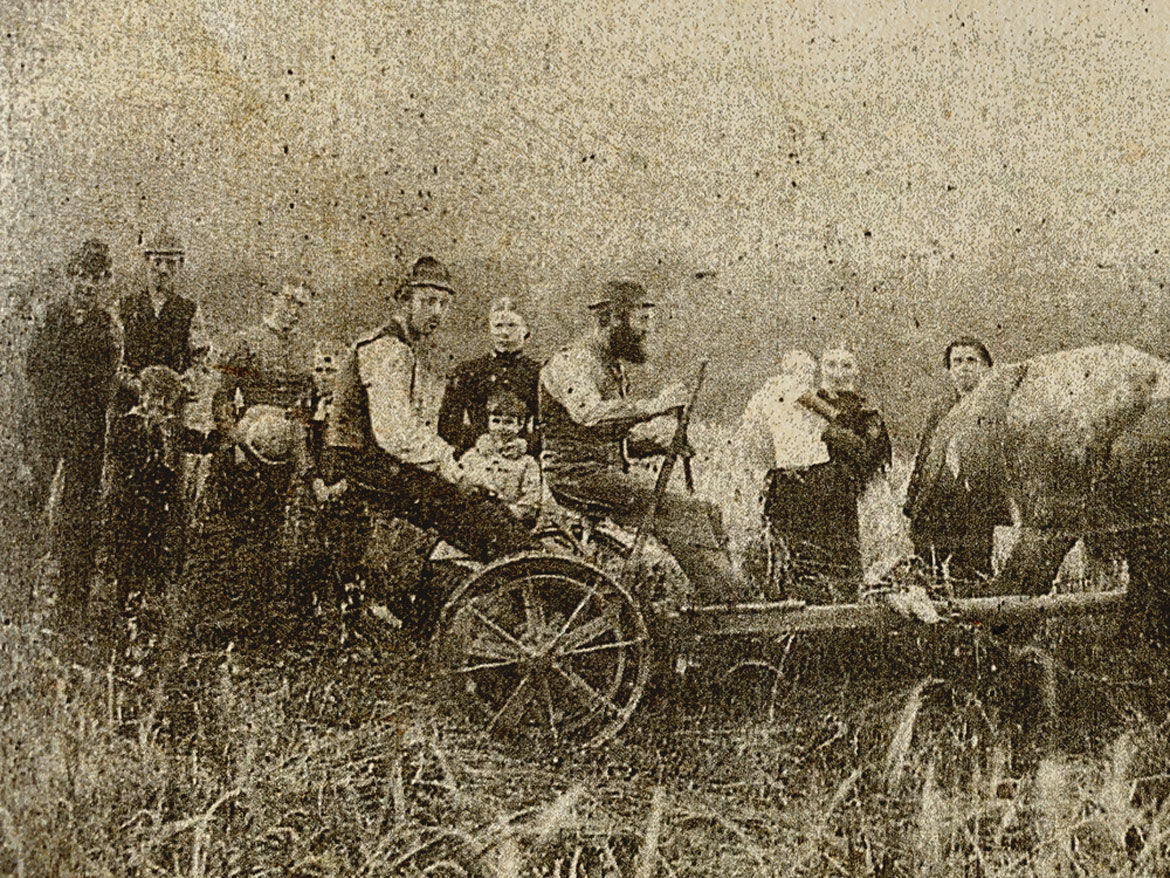
A rural family archive photograph used in Finn Thomson’s account of the Grandtully connection. This is family-history context, not a photograph of the distillery buildings.
At a glance
At a glance | Grandtully Distillery |
|---|---|
Country | Scotland |
Whisky region | Highlands |
Historic locality | South side of the Tay, near Lundin and Aberfeldy, Perthshire |
Traditional foundation | 1825 |
Historical family | Thomson |
Documented active | Barnard’s visit in the 1880s |
Closure | Early twentieth century; exact year varies between accounts |
Documented ruined | 1921 archaeological account |
Historic product name | Old Grandtully Whisky |
Current original range | None verified |
In this guide
AI summary: key points
The Thomson family history dates Grandtully to 1825 and its family connection to the late 1830s. Barnard documented it in operation during the 1880s.
His account records three washbacks, one 500-gallon pot still, two small warehouses and annual output close to 5,000 gallons.
The plant closed in the early twentieth century and was described as ruined in a 1921 archaeological account. Modern Thomson bottlings are not distillate from the lost Grandtully works.
Summarise this guide with AI
The Thomson family and a real nineteenth-century distillery
The modern Finn Thomson family history dates the foundation to 1825 and records Donald and James Thomson taking on the business in 1838. An earlier family brochure instead names John Thomson in 1837. The secure common thread is the family’s involvement from the late 1830s, rather than a single uncontested transfer date.
Alexander Thomson’s Perth grocery business traded with the distillery and sold Old Grandtully Whisky. This gives the little works a documented connection to the retail and blending trade. The later Finn Thomson independent-bottling business continues a family history, but its whiskies come from separately named distilleries.
Barnard’s visit proves that Grandtully was still producing in the 1880s, so a claimed final closure in 1878 is untenable. Later accounts give different early-twentieth-century closure years; the family brochure uses 1914. John H. Dixon’s archaeological account, presented in 1921, describes the distillery as ruined and disused.
A hillside works beside a small burn
Barnard reached the distillery by travelling from Grandtully station through the Tay valley. He placed the works on a hillside, with the Cultilloch Burn descending past the farm towards the river. He also said an earlier jointly owned distillery about a mile away had been pulled down, a useful warning against treating every reference as the same building.
Dixon located the later ruins beside the road to Lundin farm, south of the Tay and east of Aberfeldy. Subsequent archaeological excavation described a diverted burn and former water catchment serving Grandtully. These independent descriptions connect the distillery with a specific agricultural and archaeological landscape.
Two workers and an unusually compact plant
Barnard called Grandtully the smallest distillery in the United Kingdom. That is his contemporary assessment, not a modern ranking. Most of the works fitted beneath one roof. A small overshot waterwheel drove the mill, and the used water continued to the worm tub, which stood partly inside and partly outside the still house.
Barley storage and malting occupied small floors. The kiln used peat from the surrounding moors, and malt moved into a compact store before milling and mashing. Barnard’s inventory included a mash tun, three washbacks, a wash charger and one pot still holding 500 gallons. The account should not be silently changed into a standard two-still layout.
Donald Thomson and one other man carried out the work. Two stone warehouses contained about 200 casks, and Barnard put annual output close to 5,000 gallons. Those numbers are a snapshot from his visit. They show the character of the operation more clearly than an unsupported estimate of current capacity.
Plans had been considered for expansion, but Barnard reported Thomson’s reluctance to replace the existing vessels and way of working. This places Grandtully within the tension between small farm production and the larger, increasingly mechanised Scotch whisky industry.
Old Grandtully Whisky and Barnard’s tasting
The distillery sold malt to local customers and to wholesale merchants for blending. The Thomson family’s Old Grandtully name is documented, but the sources do not describe a standard contemporary-style collection of age statements and cask finishes.
Barnard tasted a six-year-old sample and found it gentle in flavour and smooth. That brief observation belongs to one historical sample. It does not establish a permanent six-year bottling, a fixed strength or detailed present-day aroma, palate and finish notes.
Distinguishing family legacy from original spirit
The survival of a family whisky business does not mean that stock from Grandtully’s still has survived in its present portfolio. A modern Finn Thomson release should be identified by the distillery, vintage and cask information on its own label.
No authenticated original Grandtully bottle was verified for this guide. A later use of the name would require its own provenance and should not be assigned to the nineteenth-century plant automatically. The historical record is substantial enough without inventing an available rare release.
Reading the landscape after the buildings have gone
There is no verified operating distillery or public whisky tour at Grandtully. The archaeological papers and the family’s reproduced map help explain the old site, but they are historical records rather than a current access plan. Nearby farmland, private buildings and archaeological remains should be treated accordingly.
The archive photograph accompanying this guide comes from the Thomson family heritage presentation. It illustrates that agricultural family history, not the distillery exterior. For an organised production visit in this part of Perthshire, consult the separate Aberfeldy, Blair Athol and Edradour guides and check their current arrangements.
Explore more regional whisky history
These guides are suggestions for further reading. Check locations, travel distances and current bookings when planning a visit.
Reader poll
Share your interests: take the four-question Grandtully Distillery reader poll
Answer four quick questions to see reader comparisons. No account or email is required.
Contribute an update
Have a correction, a distillery photograph you can share, or a tasting experience to add? Send it to Whisky Clan using the form below. You can also choose to receive the newsletter.
Frequently asked questions
Did Grandtully really exist?
Yes. Barnard visited the working distillery, and later archaeological papers describe its ruins and water system near Lundin. Confusion about later uses of the name should not erase that history.
Was Grandtully already closed in 1878?
No. Barnard’s account records it operating in the 1880s. Its final closure came in the early twentieth century.
Did it have only one still?
Barnard’s inventory names one 500-gallon pot still. This guide preserves that observation without assuming an undocumented second still or exact distillation sequence.
Was there a Grandtully 6 Year Old core release?
Barnard tasted a six-year-old sample, but that does not establish a permanent age-stated range.
Are Finn Thomson whiskies distilled at Grandtully?
The modern independent bottler sells whiskies from other named distilleries. Its family connection is historical, not proof of reopened production at Grandtully.
Sources and image credits
View sources and image credits
Alfred Barnard, The Whisky Distilleries of the United Kingdom (1887): Grandtully
The Thomson Family Whisky Collection: historical brochure and site map
John H. Dixon: Cup-marked stones in Strathtay, account presented in 1921
Margaret E. C. Stewart: excavation at Lundin Farm and the distillery water system
Featured image: Thomson family archive, reproduced by Finn Thomson Whisky.
Research checked on 27 October 2026. Tour arrangements, releases and availability can change.


Comments