
Buffalo Trace Bourbon Review


Introduction, Why Buffalo Trace Matters in Bourbon
Buffalo Trace is one of those bourbons that almost everyone recognises, even people who are relatively new to American whiskey. It sits comfortably on bar shelves, supermarket aisles and back bars around the world, yet behind that familiar bottle is one of the most important distilleries in bourbon history.
This is not just a gateway bourbon. Buffalo Trace represents tradition, consistency and scale, combined with a deep respect for heritage and experimentation. Whether you drink it neat, on ice or mixed, it plays a major role in shaping how modern bourbon is understood.
In this article, we explore the full story behind Buffalo Trace, the distillery’s long history, its owners, the wider range, marketing presence and cultural impact, before finishing with a detailed tasting review of the European and UK 40% ABV bottling. Jump to the video review I made here.

Buffalo Trace Distillery, One of America’s Oldest

Buffalo Trace Distillery is located in Frankfort, Kentucky, and is widely recognised as the oldest continuously operating distillery site in the United States. Distilling has taken place on this land since the late 1700s, long before bourbon became a legally defined category.
The distillery’s location along the Kentucky River played a crucial role in its early success. Buffalo herds once crossed the river at this point, creating a natural trail that later became a trade route. This is where the name Buffalo Trace originates.
Surviving Prohibition

One of the most remarkable parts of Buffalo Trace’s history is that it remained operational during Prohibition. It was granted one of the rare federal licences to produce whiskey for medicinal purposes, allowing it to continue distilling when most others were forced to shut down.
This continuity is a major reason why Buffalo Trace retains such deep stocks of ageing whiskey today.
Ownership and the People Behind the Brand
Buffalo Trace Distillery is owned by Sazerac Company, one of the largest privately held spirits companies in the world.
Sazerac’s ownership has allowed Buffalo Trace to operate with long-term thinking rather than short-term trends. The distillery is known for patience, laying down whiskey years or decades in advance, and maintaining consistent production methods.
The distillery has also been guided by some of the most respected figures in American whiskey, including long-serving master distillers and blenders who prioritise quality and house style over hype.
The Buffalo Trace Bourbon Range
While the standard Buffalo Trace bourbon sits at the heart of the portfolio, the distillery produces a remarkably diverse range of whiskeys using different grain recipes (mashbills) and aging techniques. Understanding these differences explains why collectors clamour for certain bottles.
Here is a breakdown of some of the most well-known bottles in the wider family and what they taste like.
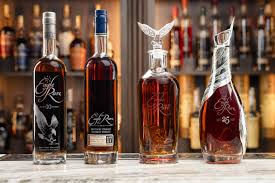
Eagle Rare 10 Year Old Eagle Rare shares the same low-rye mashbill as standard Buffalo Trace, but it is aged for a minimum of 10 years. This extra time in the wood creates a deeper, more mature profile.
Tasting Notes: Richer and drier than standard Buffalo Trace, featuring dark cocoa, dried fruits (like raisin or fig), toasted oak, and complex leather notes.

E.H. Taylor, Jr. (Small Batch) Paying tribute to one of the distillery's founding fathers, the E.H. Taylor line is generally "Bottled-in-Bond," meaning it is 100 proof (50% ABV) and aged at least four years. It is a bolder expression of the classic Buffalo Trace recipe.
Tasting Notes: Intense and sweet, offering notes of creamy butterscotch, distinct black licorice, caramel corn, and a sturdy backbone of peppery spice.

Blanton’s Single Barrel Famous for its horse-and-jockey stoppers, Blanton’s was the first commercially sold single barrel bourbon. It uses a different recipe than Buffalo Trace, featuring a higher rye content for more kick.
Tasting Notes: A deeper amber colour with a nose driven by spice and dried citrus. The palate leans towards honey, vanilla, and baking spices like nutmeg and clove, rather than heavy caramel.
W.L. Weller The Weller line is famously "wheated" bourbon. In the grain recipe, wheat is used instead of rye as the secondary grain. This is the same style of recipe used for the ultra-rare Pappy Van Winkle line, which is also distilled at Buffalo Trace.
Tasting Notes: Because wheat is softer than rye, Weller bourbons are known for being incredibly smooth, sweet, and approachable. Look for floral undertones, bright cherry fruit, soft vanilla, and very little spice burn.

Pappy Van Winkle (Family Reserve) Often considered the "holy grail" of bourbon. Produced at Buffalo Trace using the wheated mashbill (similar to Weller), these bottles are aged for extended periods 15, 20, and 23 years. The hype is legendary, but the liquid inside is renowned for its depth.
Tasting Notes: Incredibly rich and velvety due to the wheat and long aging. Expect concentrated flavours of maple syrup, dark fruits, cigar box, polished oak, and old leather, all with a smooth, lingering finish. George T. Stagg Part of the annual, highly limited "Antique Collection," this is an uncut, unfiltered, barrel-proof monster usually aged for 15 years or more. It is the ultimate expression of the standard Buffalo Trace mashbill.
Tasting Notes: An intense powerhouse not for the faint-hearted. Expect massive waves of dark chocolate, espresso, molasses, rich tobacco, and heavy, antique oak.
Sazerac Rye This is the distillery’s signature rye whiskey, symbolizing the historical connection between the distillery and the New Orleans coffee house where the Sazerac cocktail was born.
Tasting Notes: As a rye whiskey, it steps away from bourbon sweetness. It focuses on a punchy spice profile with distinct notes of black pepper, clove, anise, and candied citrus peel.
Many of these bottles have become highly sought after, particularly limited and allocated releases like George T. Stagg, which has contributed to Buffalo Trace’s cult status among collectors.
Despite the hype surrounding these rarer bottles, the core Buffalo Trace bourbon remains accessible and affordable, which is a key part of its enduring appeal.
Buffalo Trace review with Filip Janczak
Buffalo Trace and Marketing Culture
Buffalo Trace does not rely heavily on celebrity endorsements or flashy campaigns. Instead, its marketing focuses on heritage, authenticity and awards.

The distillery regularly highlights its history, traditional methods and record-breaking performance at international spirits competitions. It has become one of the most awarded distilleries in the world, a point that reinforces trust with consumers rather than chasing trends.
Buffalo Trace also appears frequently in film, television and popular culture, often as the “default” bourbon choice, reinforcing its image as a reliable and honest American whiskey.
The European and UK 40% ABV Bottling
In the United States, Buffalo Trace is typically bottled at a higher strength. In the UK and Europe, it is commonly released at 40% ABV, largely due to market preferences and taxation structures.
While this slightly lowers intensity compared to the US version, it also makes the whisky more approachable and versatile, especially for casual drinking and mixing.
Tasting Notes, Buffalo Trace Bourbon
Nose
• Vanilla
• Caramel
• Sweet corn
• Soft oak
• Light spice
The aroma is welcoming and classic, instantly recognisable as bourbon.
Palate
• Caramel and toffee
• Sweet corn
• Baking spices
• Citrus peel
• Gentle oak
The palate is smooth and balanced, with sweetness leading and spice supporting.
Finish
• Medium length
• Warm
• Light oak
• Lingering sweetness
The finish fades gently, making it easy to return for another sip.
Best Ways to Drink Buffalo Trace
Buffalo Trace is one of the most versatile bourbons available.
• Neat, for a clean, classic bourbon experience • Over ice, to soften the sweetness • With cola, for an easy, crowd-pleasing mix• As a base for classic cocktails
It performs well in almost any setting, from quiet sipping to social drinking.
Verdict and Rating
Buffalo Trace does not try to be extreme or experimental. Instead, it focuses on balance, approachability and consistency.
It may not challenge experienced bourbon drinkers in the same way as higher proof or limited releases, but it delivers exactly what it promises, a well-made, reliable Kentucky bourbon.
Final verdict, approachable, versatile and dependable.
A solid choice for beginners and experienced drinkers alike.
Why Buffalo Trace Remains So Popular
• Over 200 years of distilling history
• Continuous operation through Prohibition
• Backed by Sazerac’s long-term vision
• Broad and respected product range
• Excellent value and accessibility
Buffalo Trace has earned its place not through hype, but through consistency.
FAQs, Buffalo Trace Bourbon
Is Buffalo Trace a good beginner bourbon?
Yes. Its balance and smoothness make it very approachable.
Why is Buffalo Trace 40% ABV in the UK?
This is largely due to market preferences and taxation differences.
Is Buffalo Trace good for mixing?
Yes. It works extremely well with cola and in classic cocktails.
Is Buffalo Trace smoky?
No. It focuses on sweetness, spice and oak rather than smoke.
Is Buffalo Trace worth the price? Absolutely. It offers strong value for money in its category.


Comments